
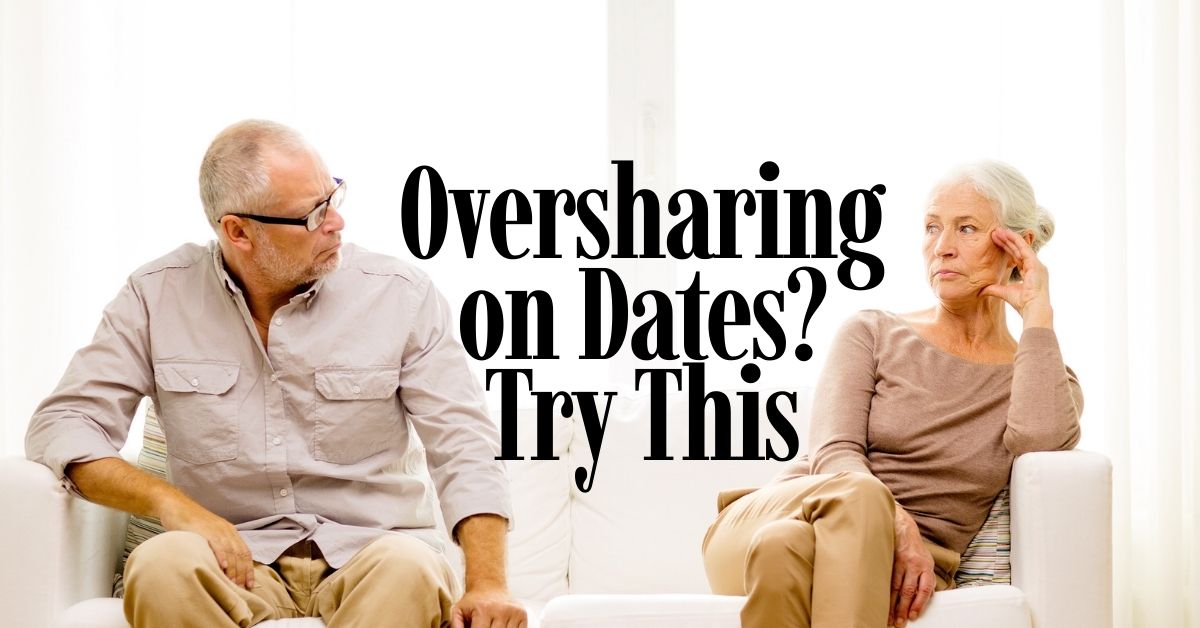
Talking About Your Past: How To Avoid Oversharing On Your Date

Dating later in life comes with a gift and a challenge: you have stories. A lot of them. Decades of love, heartbreak, growth, mistakes, joy, and lessons learned. Knowing how to share those stories is where things can get tricky. Good dating communication tips can help you strike that sweet spot between being open and being too open—especially on early dates.
Oversharing doesn’t mean you’re doing anything wrong. It usually means you’re nervous, excited, or genuinely trying to connect. But when too much personal history comes out too soon, it can overwhelm a date or shift the mood in ways you didn’t intend. Let’s talk about how much to share, when to share it, and how to keep conversations comfortable, engaging, and just the right amount of personal.
Why Oversharing Happens (Especially Later in Life)
If you’re dating in your 40s, 50s, 60s, or beyond, you’re not starting with a blank slate. You may have been married, divorced, widowed, raised kids, cared for aging parents, changed careers, or lived through major life events. That’s normal—and valuable.
Oversharing often happens because:
- You’re used to deeper conversations and skip small talk
- You want to be honest and upfront
- You’re nervous and fill silence with personal details
- You feel pressure to “explain” your past
- You finally feel ready to talk about things you kept inside for years
None of this makes you a bad date. It just means you need a little awareness and pacing.
The Difference Between Being Open and Oversharing
Being open builds trust. Oversharing can create emotional imbalance—especially if one person reveals far more than the other early on.
A good rule of thumb:
Openness invites connection. Oversharing demands emotional labor.
Here’s how to tell the difference:
- Openness feels mutual, comfortable, and relevant to the moment
- Oversharing feels heavy, one-sided, or like a therapy session
- Openness leaves room for curiosity
- Oversharing can shut conversation down
If you notice your date going quiet, changing the subject, or looking uncomfortable, that’s often a sign to gently pull back.

Dating Communication Tips: How Much of Your Past to Share
This is where solid dating communication tips really come into play. You don’t need to hide your past—but you also don’t need to unload it all at once.
What’s usually okay to share early on:
- That you’ve been married or in long-term relationships
- General reasons a relationship ended (without graphic detail)
- What you learned about yourself from past relationships
- What you’re looking for now
What’s better saved for later:
- Deep emotional wounds
- Detailed divorce stories
- Sexual history specifics
- Ongoing conflict with an ex
- Trauma or unresolved pain
Think of dating like reading a good book. You don’t skip to the final chapters on the first page.
Signs You Might Be Oversharing
Sometimes we don’t realize we’ve crossed the line until after the date. Here are a few signs to watch for in the moment:
- You’re talking much more than you’re listening
- You feel emotionally drained afterward
- You shared things you usually only tell close friends
- You feel vulnerable in a way that doesn’t feel good
- You regret saying certain things once you get home
If this happens, be kind to yourself. Awareness is progress.
How to Share Your Story Without Overwhelming Your Date
You can talk about your past in a way that feels healthy and attractive. It’s all about framing and timing.
Try this approach:
- Keep it high-level at first
Share the headline, not the full article. - Focus on growth, not blame
Talk about what you learned rather than what went wrong. - Pause and invite your date in
Ask a question instead of continuing your story. - Match depth
If your date is sharing lightly, do the same. - Notice the energy
If the mood shifts, adjust.
Example:
Instead of: “My ex cheated on me for years and it destroyed my trust…”
Try: “My last relationship taught me how important honesty is to me.”
Same truth, very different impact.
Topics That Often Lead to Oversharing (Handle With Care)
Some subjects naturally pull people into deeper emotional territory. You don’t have to avoid them completely—just approach them gently.
- Divorce details
- Loss of a partner
- Estranged family relationships
- Health issues
- Financial struggles
If one of these comes up, you can acknowledge it without diving deep:
“That was a challenging time in my life, but I’ve done a lot of healing since then.”
That sentence alone shows self-awareness, strength, and emotional maturity.
The Power of Leaving a Little Mystery
There’s something refreshing about not telling everything right away. Mystery isn’t about playing games—it’s about pacing.
When you don’t overshare:
- Conversations feel lighter and more enjoyable
- Your date stays curious and engaged
- You protect your emotional energy
- Trust builds naturally over time
You’re not auditioning for a relationship on the first date. You’re simply seeing if there’s enough comfort and curiosity to want a second one.
What If Your Date Is the One Oversharing?
It happens. Sometimes you’re the one nodding politely while someone unloads their entire life story over coffee.
You can gently steer things back by:
- Changing the subject with a question
- Keeping your responses shorter
- Redirecting to something lighter
- Saying, “That sounds like a lot—how about we talk about something fun?”
You’re allowed to protect your own comfort, too.
Trust Builds in Layers, Not All at Once
One of the biggest mindset shifts in dating later in life is remembering that emotional intimacy doesn’t have to be instant. It grows in layers.
Early dates are for:
- Shared interests
- Laughter
- Values
- Curiosity
- Comfort
Deeper sharing naturally follows when trust and consistency are there. Let it unfold instead of forcing it.
A Final Thought on Sharing Your Past
Your past matters. It shaped you. But it doesn’t need to define every date or dominate every conversation. The goal isn’t to hide—it’s to share with intention.
When you focus on connection rather than confession, dating becomes more relaxed, more fun, and far less emotionally exhausting.
Want More Practical Relationship Advice?
If this topic resonated with you, you’re not alone—and you don’t have to figure dating out by yourself. Explore our other blogs here on Mature Singles Finding Love for more honest, practical advice on dating, love, intimacy, and relationships later in life. There’s always something new to learn, and it’s never too late to create meaningful connections.